Why Independent Broker Scoring With Weekly Updates Matters
Understanding Criteria-Based Broker Evaluation
When evaluating an online broker, retail investors face a familiar challenge: there's no single "best" platform for everyone. What matters depends on your trading style, account size, asset preferences, and technical needs. A structured, criteria-based approach to broker evaluation helps cut through the noise and surface the real tradeoffs.
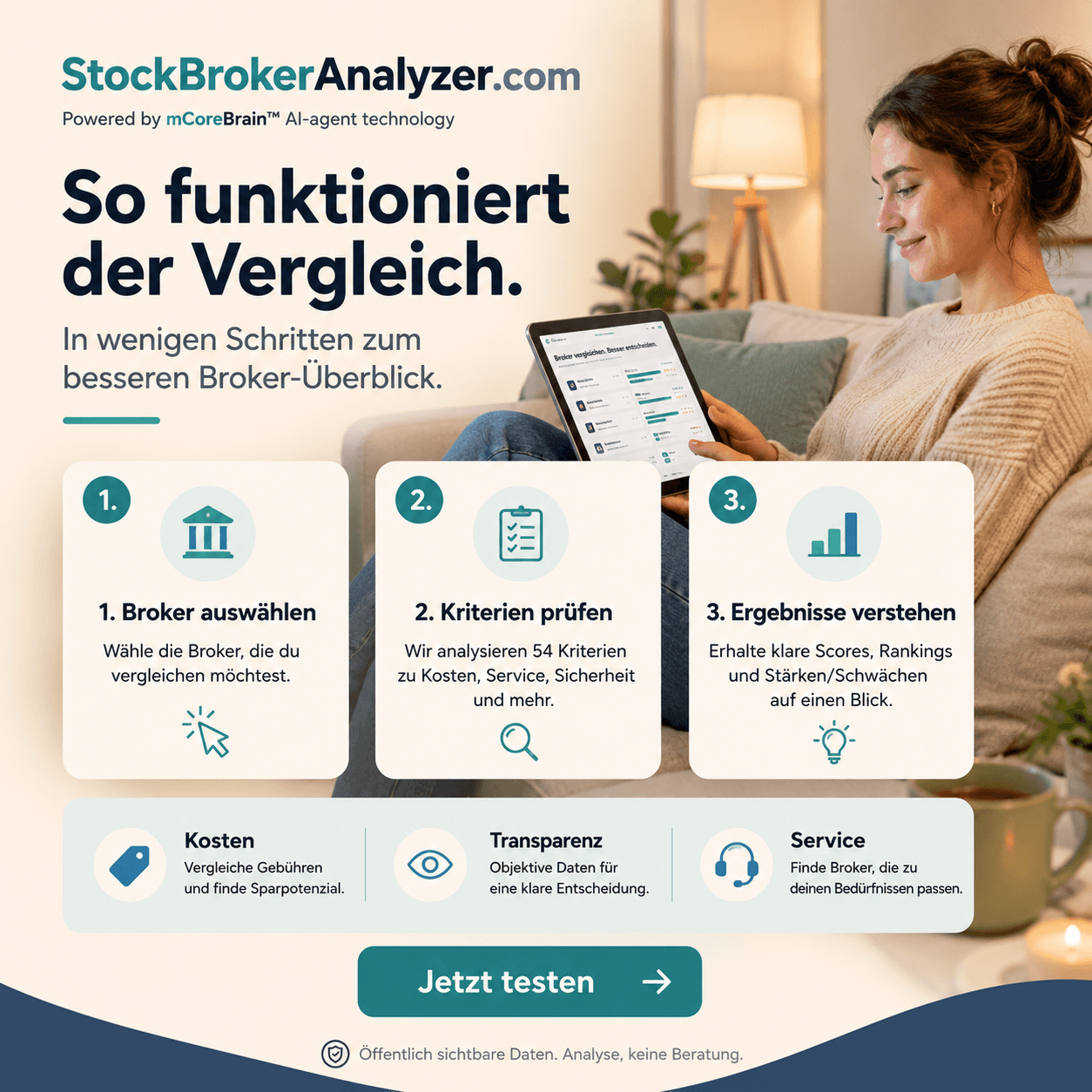
StockBrokerAnalyzer.com uses a fixed framework of 54 publicly verifiable criteria to independently evaluate online brokers. Rather than subjective rankings or affiliate-driven recommendations, this methodology measures whether specific features and functions exist, then re-verifies that data every week to ensure scores reflect the current state of each platform.
How Fixed Criteria Work
Fixed criteria mean the same measures apply to every broker, every time. A feature either exists or it doesn't—there's no room for bias or editorial preference. These criteria span core areas: account types, regulatory compliance, fee structures, platform features, research tools, customer support channels, mobile capability, and educational resources.
By holding every platform to the same checklist, the evaluation becomes repeatable and transparent. You see not just a score, but the underlying reasoning—which specific criteria your broker meets or misses, and why that might matter for your strategy.
Why Weekly Re-Verification Matters
Brokerages change rapidly. A new feature launch, a fee increase, a regulatory action, or a platform redesign can happen any week. If an evaluation sits static for months, it becomes less useful the moment conditions shift.
Weekly re-verification ensures that scores reflect real-time reality. When a platform adds a new research tool or modifies its cost structure, that change is captured and reflected in the updated evaluation. For investors comparing brokers or monitoring where their own platform stands in the broader landscape, current data is essential.
Transparency as a Foundation
Publicly available information forms the backbone of this approach. Criteria are sourced from official broker websites, regulatory filings, fee schedules, and documented feature sets—not from rumors, insider claims, or unverified reviews. This means every data point you see can be traced back to a public source.
This transparency also serves the brokerage firms themselves. Rather than guessing why their score might differ from competitors, they see exactly which criteria they meet and which they don't. That clarity can guide product and compliance decisions.
What a Scorecard Actually Tells You
A criteria-based score shows comparative strengths and gaps, not inherent quality. One broker may excel in mobile app features while another leads in research depth or cost-effectiveness for options traders. The evaluation surfaces these patterns without declaring a universal winner—because the right broker depends entirely on your priorities.
Investors who understand how the evaluation works—what it measures, how often it updates, what sources it trusts—can make informed choices about whether a platform aligns with their needs. The score becomes a tool, not a verdict.
How to Use This Approach
When comparing brokers using criteria-based evaluation, start by identifying which factors matter most to you: perhaps account minimums, trade commissions, research tools, or regulatory standing. Then look at how each platform scores in those specific areas, not the overall rank. A broker that scores well on technical analysis tools but lower on educational content might be perfect for an experienced trader yet inadequate for a beginner.
Weekly updates mean you should revisit evaluations regularly if you're actively comparing platforms or monitoring changes at your current broker. Markets move fast; broker offerings do too.
Analysis, not investment advice.
Sources
This article discusses the general principles of structured broker evaluation using publicly available information. StockBrokerAnalyzer.com's methodology reflects these principles through fixed criteria and regular re-verification, supporting transparent, evidence-based broker comparison for retail investors.