
What Weakens a Broker's Evaluation Score: Key Deficiency Areas
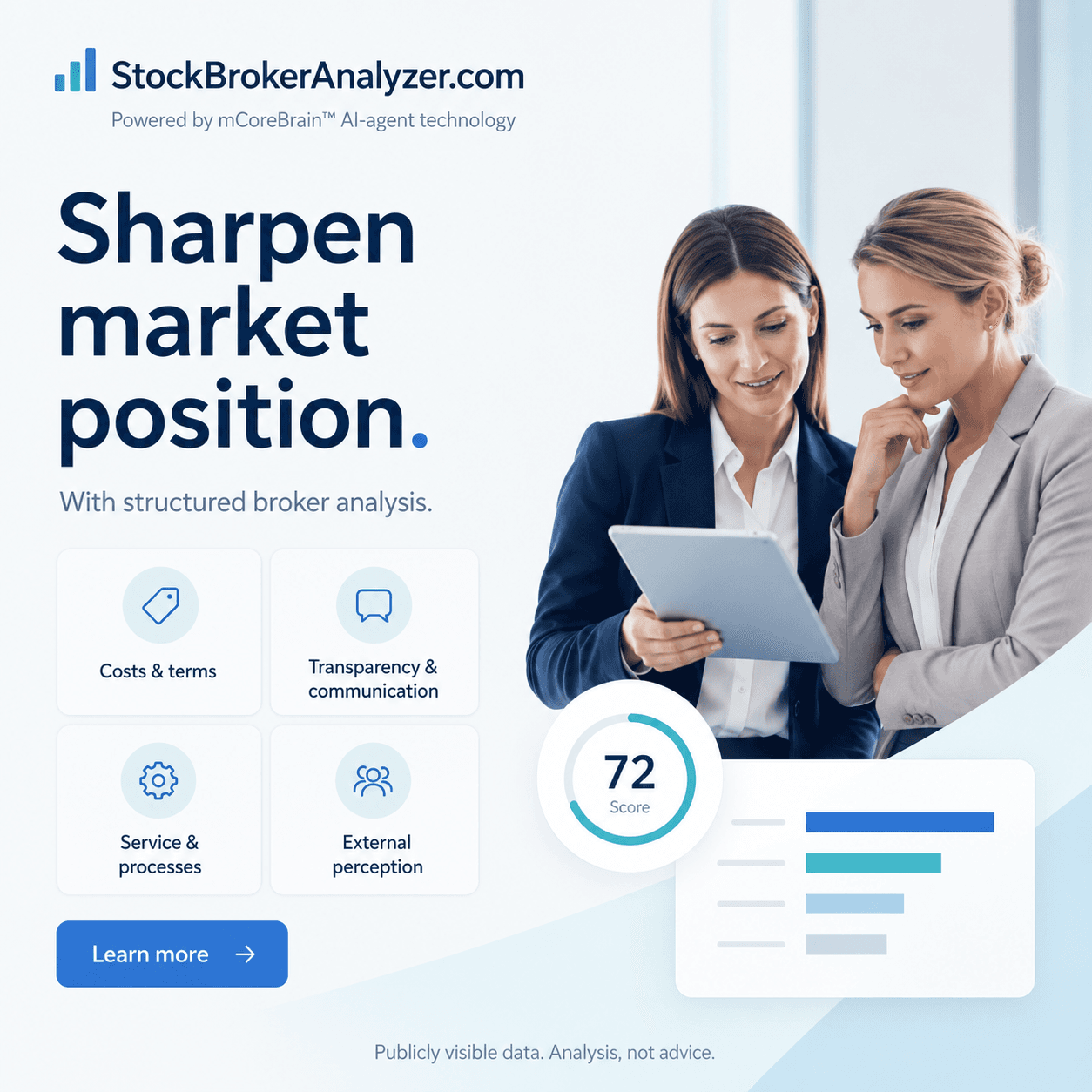
When independent analysis evaluates online brokers using structured criteria, certain gaps emerge repeatedly. Knowing what typically weakens a broker's score helps you understand not just the numbers, but the real-world gaps they represent.
Common Areas Where Brokers Lose Points
Broker evaluation frameworks typically assess platforms across several core dimensions, and performance varies sharply. Based on publicly available regulatory standards and evaluation methodologies, several categories consistently show weaknesses across certain providers.
Regulatory and Compliance History
FINRA uses a combination of tools to reduce investor harm, including assessments of applications, reviews of membership and continuing membership applications, disclosure of brokers' regulatory backgrounds, supervision requirements, focused examinations, risk monitoring and disciplinary actions. Evaluation frameworks check for compliance violations, disciplinary records, and regulatory designations. Brokers with higher incident counts in these areas score lower—sometimes significantly—because regulatory history is foundational to trust.
Customer Protection Infrastructure
Customer protection requires account safeguards for customer funds and securities. Evaluation criteria assess whether a broker has adequate segregation of client assets, insurance coverage, and dispute-resolution mechanisms. Platforms with lower transparency around these protections or outdated safeguards frequently score worse in this category than those emphasizing them clearly.
Educational Resources and Clarity
Brokers often underinvest in educational content, which weakens scores when evaluation includes learning materials. Frameworks measure both the depth of available resources and how effectively they help investors understand complex topics—not just whether a broker offers them. A sparse "Learn" section typically pulls down overall evaluation results, particularly for platforms targeting beginners.
Platform Usability and Design
Qualitative evaluation examines whether a broker's platform is genuinely intuitive to use in practice. Features that exist "on paper" but are buried, confusing, or poorly integrated score lower than those seamlessly integrated into the workflow. Many brokers lose points here because they add features without refining the user experience.
Fee Transparency
Structured evaluation frameworks check whether a broker clearly discloses all costs—not just headline trading commissions, but inactivity fees, account maintenance fees, withdrawal charges, and spreads. Brokers that bury fee information or present it unclearly frequently score lower in cost transparency dimensions than those presenting a single, clear fee schedule.
Why This Matters to You
Understanding what weakens a broker's evaluation score tells you which areas to examine yourself when choosing a platform. If a broker scores low on regulatory compliance history, that's a red flag worth investigating further through official records. If educational resources score poorly, consider whether the platform suits a beginner or self-directed investor.
Criteria-based evaluation shines because it breaks down performance into measurable categories rather than offering a single opinion. That structure means when you see a broker's score, you can drill into the specific areas driving it—and make decisions based on what matters most to you, not just a aggregate ranking.
Analysis, not investment advice.